
Renovation of Critical Irrigation Infrastructure Underway in Mullaitivu District with funding from the Adaptation Fund
30 September 2026, Mullaitivu, Sri Lanka. To strengthen agricultural water security and climate resilience in Mullaitivu District, UN-Habitat Sri Lanka in partnership with the Ministry of Environment and the Mullaitivu District Secretariat is improving 16 critical irrigation infrastructure systems with funding from the Adaptation Fund.
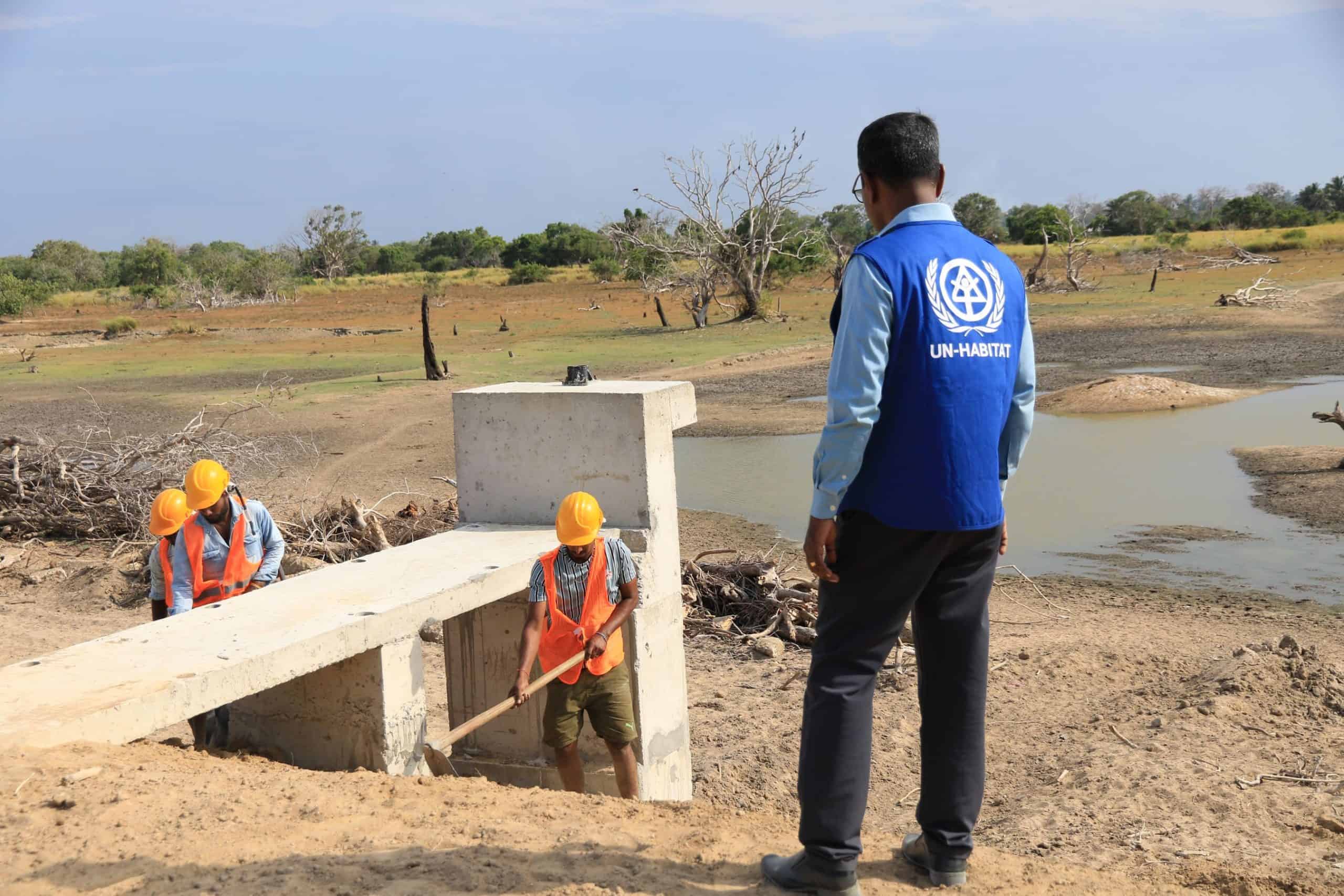 Currently, renovation work on seven irrigation tanks, four anicuts (small dams to regulate water flow), three irrigation channels, a downstream development and a saltwater protection bund are in progress in Maritimepattu and Puthukudiyiruppu DS divisions. UN-Habitat is working closely with the Mullaitivu District Secretariat, which serves as the executing entity for the project at field level, in coordination with the Department of Agrarian Development and local communities. Farmer organizations and community members are engaged throughout the implementation process, supported by a community monitoring system to oversee progress and quality.
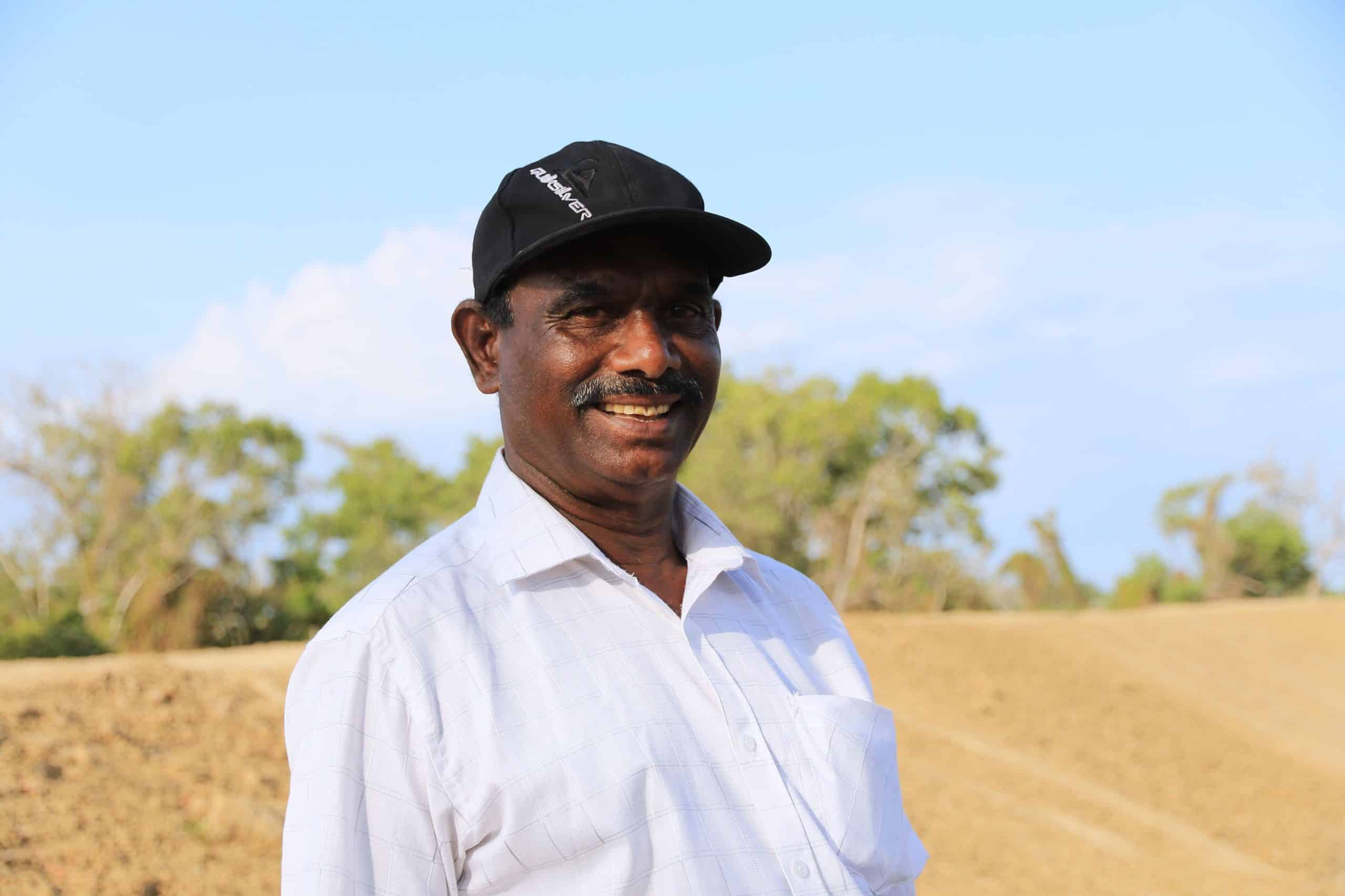 Mr.Nadesan Tharmalingam, President of the Community Monitoring Team and member of the Farmer Organization in Suthanthirapuram Grama Niladhari division said: “Rehabilitation of the Sirraddaiparichchankulam minor irrigation tank will greatly improve water availability for farmers in our village. We are committed to working together to ensure the proper maintenance and sustainable use of the tank to benefit our farming community.”
The irrigation improvements are incorporating climate-resilient features to increase water storage and improve water regulation. Rehabilitation of anicuts and downstream irrigation channels will improve water conveyance and distribution to paddy fields, supporting more reliable and climate-resilient cultivation and strengthening food security, particularly during dry seasons which is expected to be aggravated due to impacts of El Nino. The salt-water protection earthen bund will help protect paddylands from saline water intrusion from nearby lagoons during the monsoon rains.
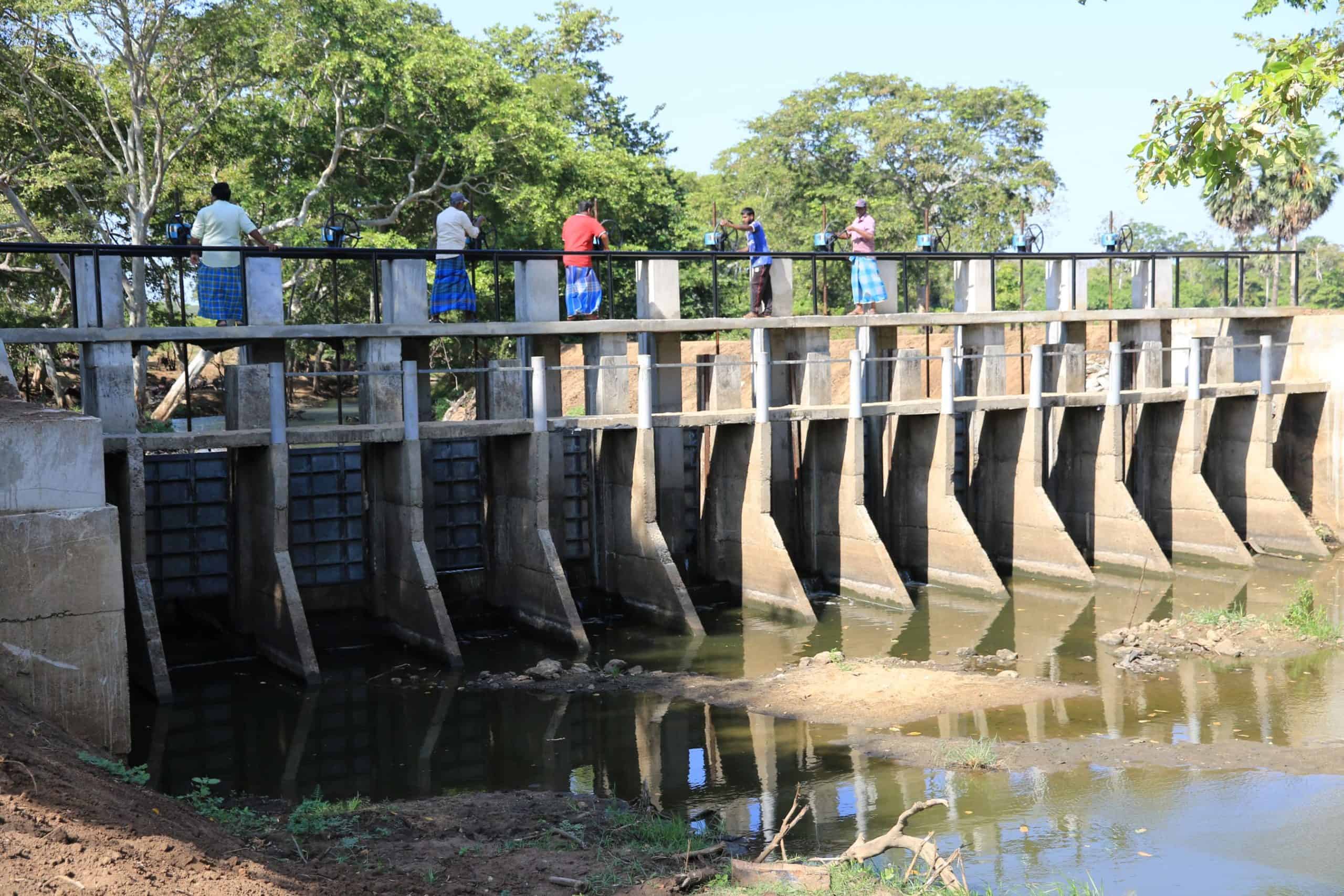 Upon completion, these interventions are expected to improve water security and agricultural productivity for approximately 1,490 farmers, including 224 women farmers in Mullaitivu District. Environmental and social safeguard measures are integrated throughout the implementation process, with guidance from the Central Environmental Authority, to ensure that all works are carried out in an environmentally sustainable and socially responsible manner, while minimizing potential adverse impacts on the surrounding ecosystems and local communities.
The rehabilitation of these critical irrigation systems is undertaken though the project “Build resilience to climate change and climate variability of vulnerable communities in Mullaitivu District of Sri Lanka”. It represents an important investment in the long-term resilience of Mullaitivu’s agricultural communities, helping farmers better manage increasingly uncertain water availability while strengthening the sustainable use of local water resources.