
Communities Lead Mangrove Restoration Efforts to Strengthen Climate Resilience in Mullaitivu District
26 July 2026, Mullaitivu, Sri Lanka. To help conserve and restore vital mangrove ecosystems in Sri Lanka’s Northern Province, communities in Mullaitivu District are restoring two hectares of degraded mangrove habitats in Nayaru Lagoon under an Adaptation Fund-supported climate resilience project.
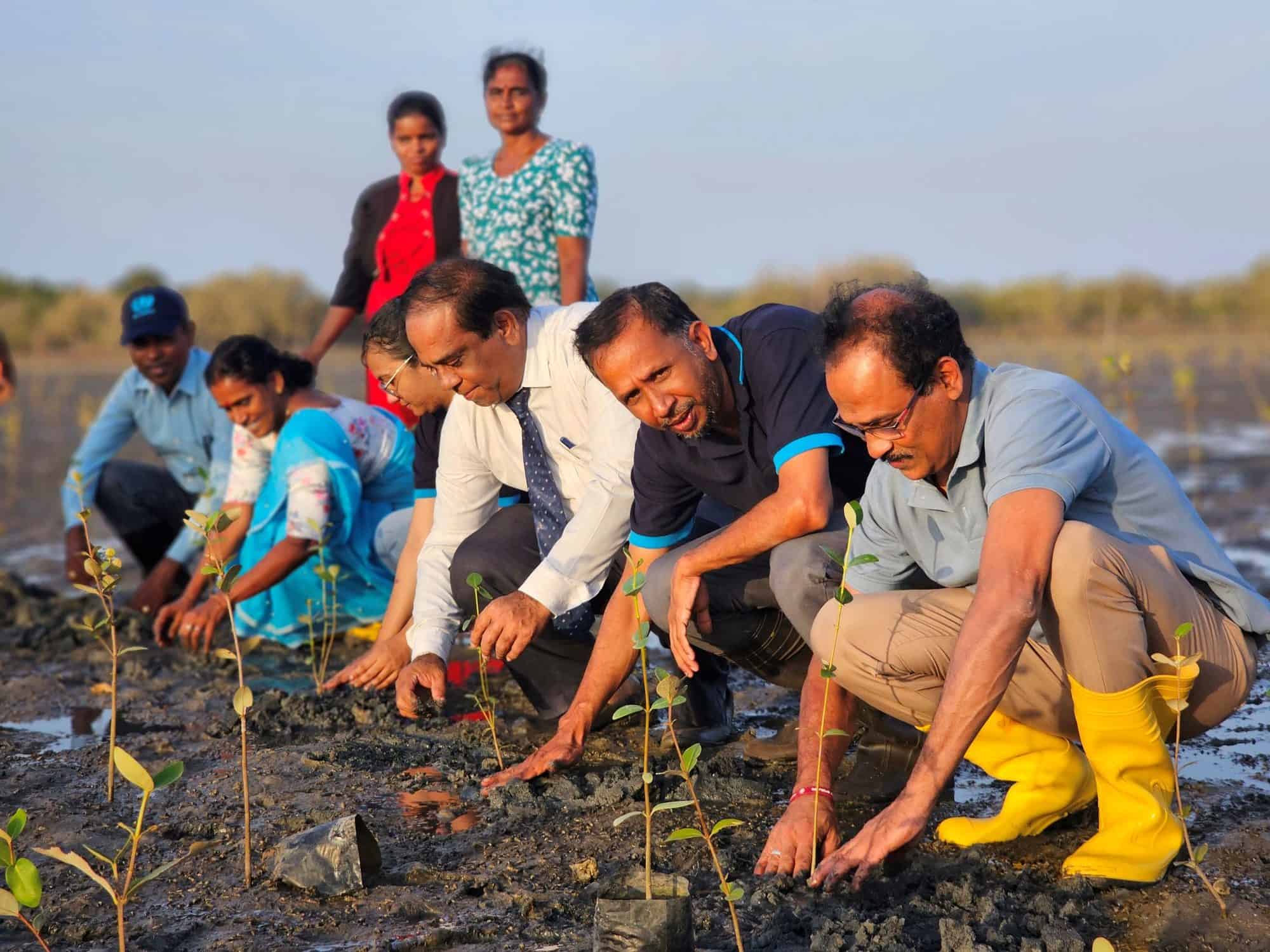 As part of the first phase of the restoration programme, more than 24,000 mangrove saplings have been planted, representing nearly 50 percent progress towards the overall target of planting 50,000 mangrove saplings. This initiative is implemented by UN-Habitat in partnership with the Ministry of Environment, Mullaitivu District Secretariat, and community-based organizations from 2023-2027.
During a recent field visit to monitor project progress, UN-Habitat and Government of Sri Lanka officials joined community members to plant mangrove saplings along the shores of Nayaru Lagoon. Mr. A Umamaheswaran, District Secretary of Mullaitivu, Mr. Leel Randeni, Director of the Climate Change Secretariat of the Ministry of Environment, the Planning Director, Mullaitivu District Secretariat, and representatives from UN-Habitat actively participated in this initiative.
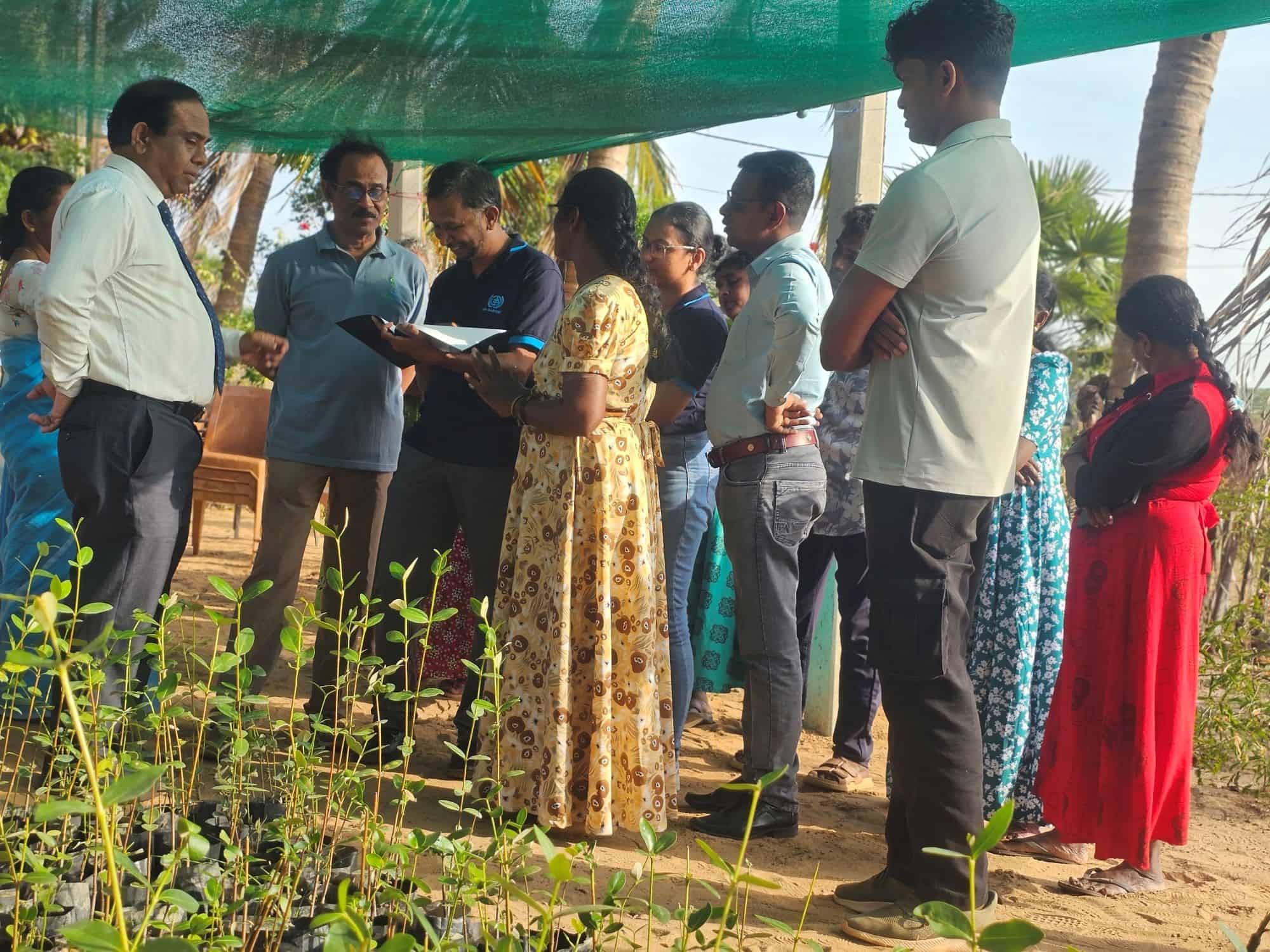 Communities are at the centre of the mangrove restoration efforts. While technical experts provide training on nursery management, species selection, and planting techniques, community members are responsible for the day-to-day management of the nurseries.
The restoration follows a science-based approach. Mangrove species are selected according to local salinity levels, tidal conditions and soil characteristics. This community-led approach not only restores vital coastal ecosystems but also builds local knowledge, promotes community ownership, and supports long-term stewardship of natural resources.
As the world marks the International Day for the Conservation of Mangrove Ecosystems on 26th July 2026, this initiative demonstrates how partnerships between government agencies, development partners, technical experts, and local communities can restore ecosystems, build resilience to climate change through coastal protection against floods and storms, and support sustainable development.
Mr. A. Umamaheswaran, District Secretary, Mullaitivu discussing the project’s community-driven approach stated, “The active participation of local communities in nursery management, planting, and safeguarding mangroves fosters a strong sense of ownership. This model can be successfully replicated in other coastal districts across Sri Lanka to enhance climate resilience and protect critical ecosystems”.
Beyond environmental protection, the programme is also creating new opportunities for local economic development in Mullaitivu. Community members are gaining practical skills in nursery management and restoration work, while healthy mangrove ecosystems are expected to improve fisheries productivity, support eco-tourism, encourage nature-based enterprises, and contribute to increased household incomes in the years ahead.
With a USD 2 million grant from the Adaptation Fund, the overall project “Build resilience to climate change and climate variability of vulnerable communities in Mullaitivu District of Sri Lanka” is supporting vulnerable communities in Mullaitivu District adapt to climate change through ecosystem restoration, climate-resilient infrastructure, disaster risk reduction, and livelihood development.