
Creating sustainable, climate-resilient livelihoods with local produce in Mullaitivu District
 23 November 2026, Mullaitivu, Sri Lanka. Climate change is creating growing challenges for farming communities in Sri Lanka’s Mullaitivu District. Unpredictable weather patterns, prolonged dry spells, and seasonal changes affect agricultural production and increase the risk of post-harvest losses. Even when harvests are good, farmers face difficulties accessing markets and lack the necessary skills and equipment to produce value added agricultural products which improve household incomes.
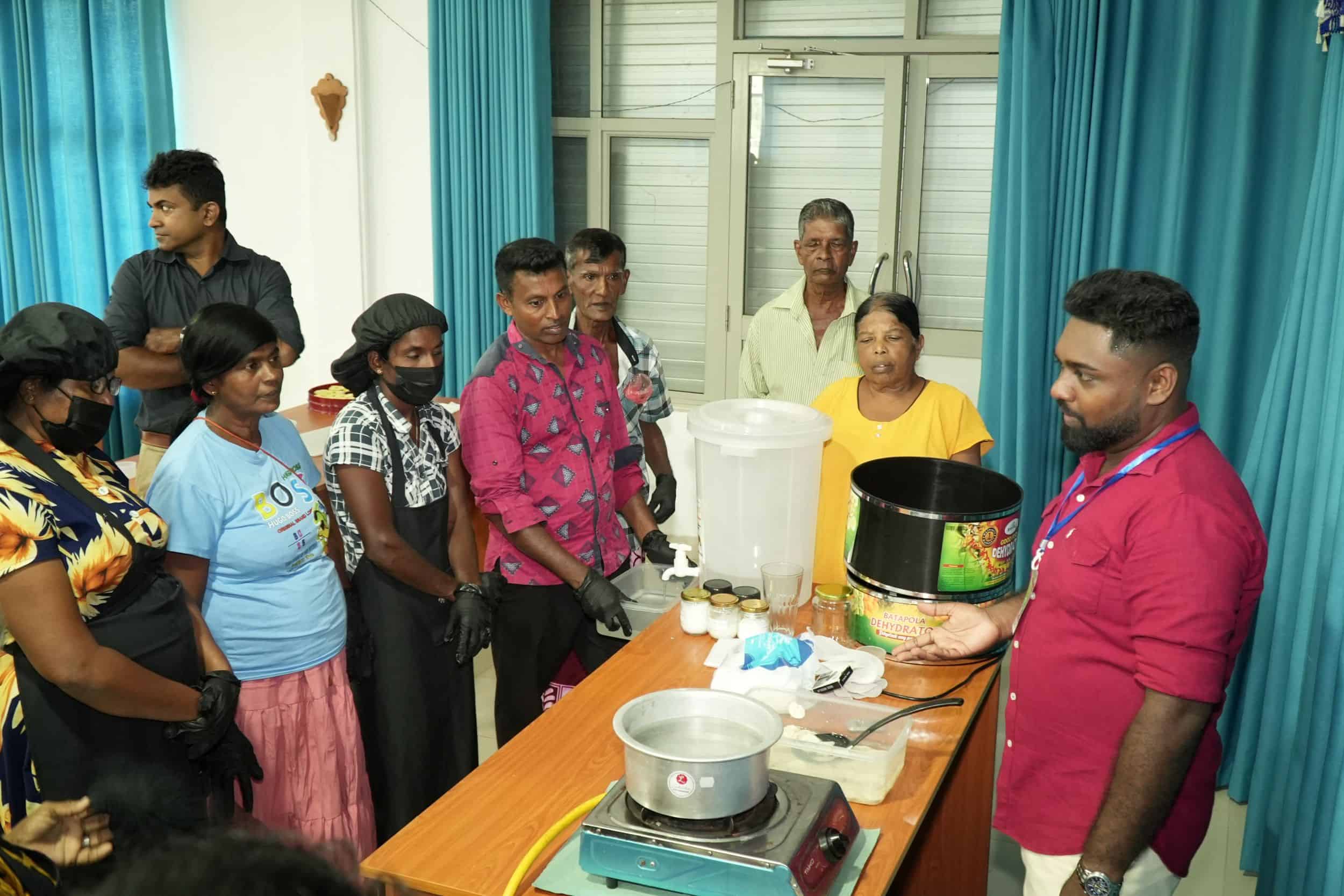
Recognizing the importance of strengthening local skills and creating alternative livelihood opportunities, UN-Habitat organized a skills development workshop on food dehydration, bottling and packaging technology in collaboration with ENLEARN Institute of Skill Development for 30 residents (21 women and 09 men) in Weli Oya DS Division. This initiative is part of the overall project “Build resilience to climate change and climate variability of vulnerable communities in Mullaitivu District of Sri Lanka”, funded by the Adaptation Fund.
This interactive, one-day workshop provided the participants with technical knowledge and practical experience in different food preservation methods. Through classroom sessions and demonstrations, they learned about food preservation principles, food safety and hygiene, selection and preparation of raw materials, and dehydration processes using cabinet and solar drying equipment.
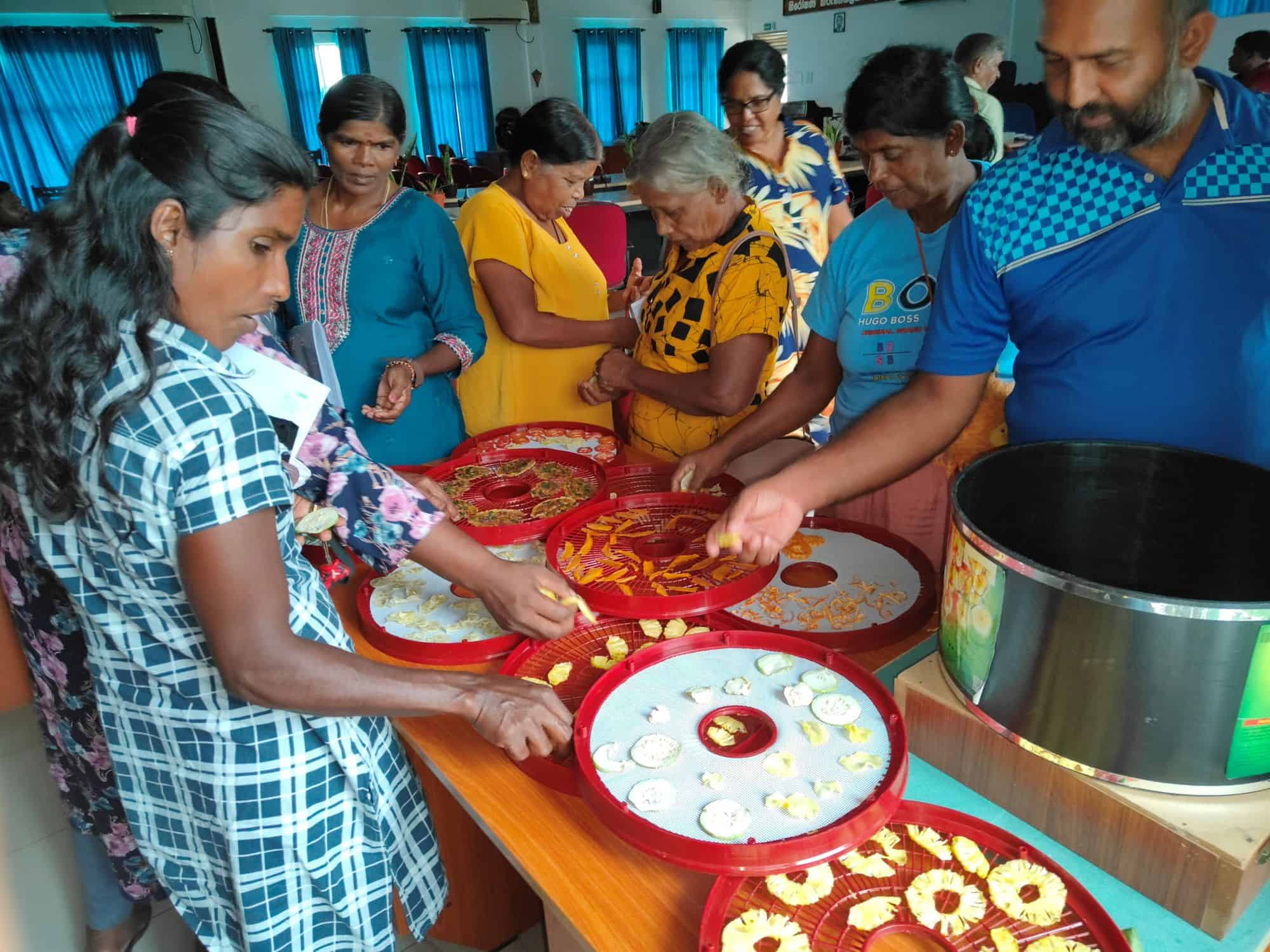 Practical sessions introduced participants to bottling and brining methods, preparation of preservation solutions, and suitable packaging, labelling, and storage practices. They were also introduced to various products that can be developed from locally available fruits, vegetables, and herbs.
Mr. D. D. G. D. Wijesuriya a resident of Gajabapura Grama Niladhari Division, said “This training provided me with useful practical knowledge of food preservation, dehydration and packaging. I learned how to turn our local fruits and vegetables into value-added products. This will help me reduce post-harvest waste and earn an additional income”.
The programme also explored the business potential of value-added agricultural products. Participants gained an understanding of basic enterprise development, product quality assurance, and market opportunities, helping them to add value to local produce and explore new livelihood opportunities. By promoting appropriate food preservation and processing techniques, the initiative seeks to minimize post-harvest losses, extend the shelf life of agricultural products, and create additional livelihood opportunities for rural households. These skills can also encourage small-scale food-based enterprises and sustainable local economic activities.
This project is implemented by UN-Habitat in partnership with the Ministry of Environment and Mullaitivu District Secretariat, with the participation of communities and relevant government institutions, including the Department of Agriculture and Welioya Divisional Secretariat.