
Integrated Support to the National Building Research Institute (NBRI)
| Funded by | Government of Australia |
| Budget | USD 228,445 (Total Grant amount: USD 699,113) |
| Implementing Partners | UNOPS, UN-Habitat, IOM |
| Duration | June – November 2026 |
| Project Partner | National Building Research Institute (NBRI) |
| Location | Kandy, Nuwara Eliya, Badulla, Matale and Kegalle Districts |
Background
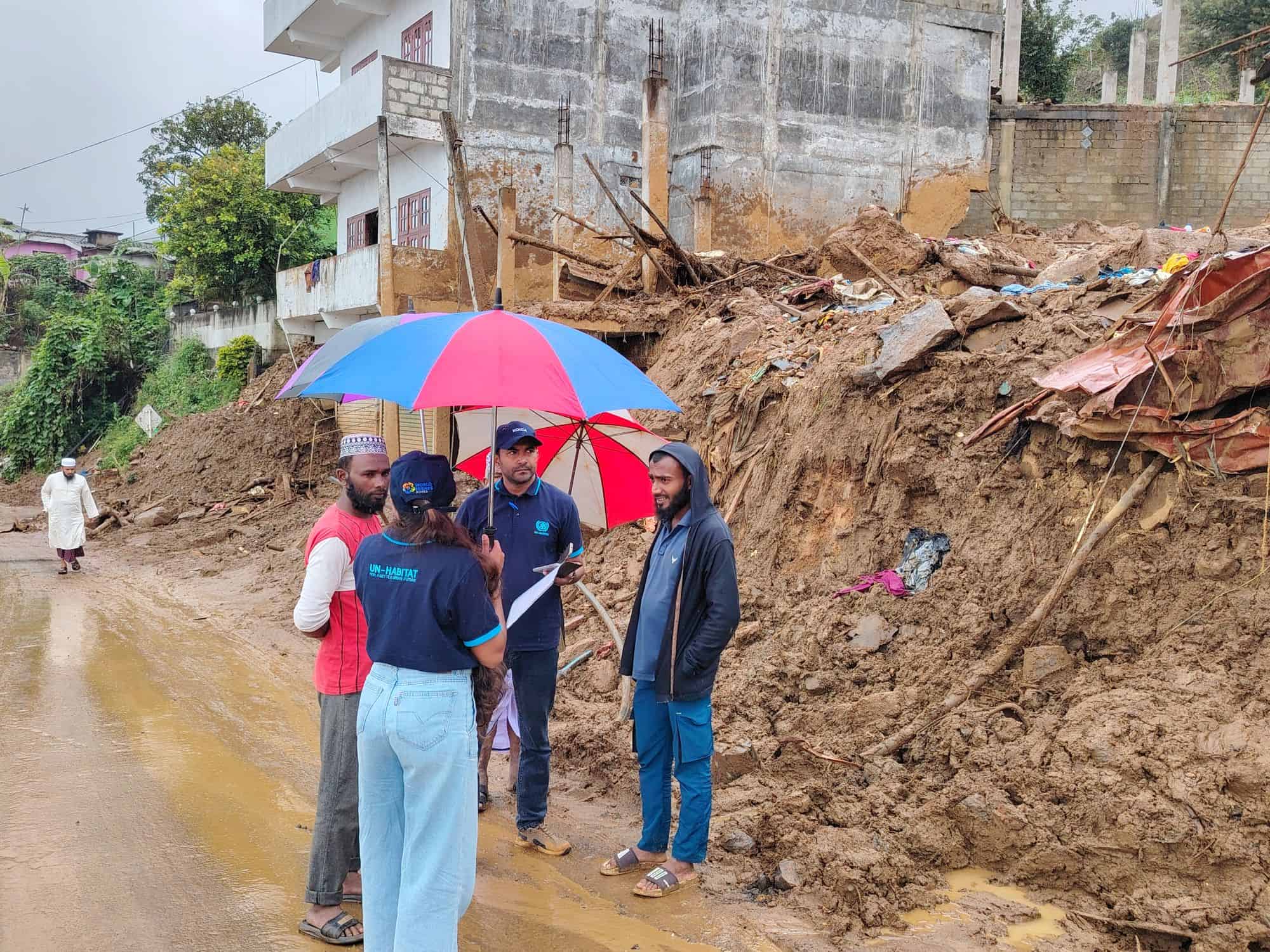
Cyclone Ditwah caused the most extensive flooding and landslide damage in Sri Lanka in over two decades, affecting approximately 2.2 million people. By 29 December 2025, the Disaster Management Center had recorded 646 fatalities and 173 people missing, primarily due to floods and landslides.
As of April 2026, more than 150,000 people remain displaced or living with host families. Displacement is becoming increasingly protracted, with temporary sites emerging in Badulla, Kegalle, and Nuwara Eliya Districts. Housing damage is widespread, nearly 6,000 houses have been fully damaged and an estimated 109,000 partially damaged. Many families remain in overcrowded emergency shelters with limited access to sanitation, clean water, and essential services, and in rented houses or with host families.
As climate related disasters grow in both intensity and regularity, current recovery efforts must account for this heightened regional risk landscape. This necessitates a strategic increase in disaster preparedness and response to safeguard vulnerable communities against these recurring threats.
The Project
Jointly implemented by UNOPS, UN-Habitat and IOM, this project supports the transition from immediate humanitarian response under the Cyclone Ditwah Humanitarian Priorities Plan (HPP) towards longer-term, Post-Disaster Needs Assessment (PDNA)-informed recovery and resilient reconstruction. It aims to strengthen national systems and technical capacities required for evidence-based, climate-informed and socially inclusive resettlement and infrastructure reconstruction.
The project has been developed in close coordination with the Government of Sri Lanka, NBRI, and United Nations partners in response to the scale of technical demand in the post-disaster recovery phase. It adopts an integrated, multi-agency approach that brings together complementary expertise within a single programme framework.
Objective
To strengthen national capacity for landslide risk assessment, resilient infrastructure planning, and disaster recovery management, enabling safe, dignified, and durable recovery for communities affected by landslides and flooding in Sri Lanka, through targeted engineering, geospatial, social, and programme management support.
Project Approach
The project employs an integrated, multi-agency strategy that bridges technical evidence with inclusive, community-centered participation. By grounding engineering designs and climate-informed hazard mapping in multi-sector assessments and local realities, the approach ensures that recovery solutions are both resilient and socially equitable. This sequenced methodology fosters long-term sustainability by embedding institutional ownership within the Government agencies, while ensuring the active engagement of marginalised groups throughout the entire project cycle.
UN-Habitat will provide technical and participatory planning expertise for inclusive, risk-informed settlement planning, ensuring that resettlement plans are safe, climate-resilient, socially equitable, and culturally appropriate. Using the participatory “People’s Process” methodology, which places families at the centre of planning and implementation of all interventions, UN-Habitat will support communities to map their own risks, validate needs assessment findings and co-design the most appropriate resettlement options. UN-Habitat will also coordinate site visits, land assessments, and facilitate beneficiary feedback to ensure a socially equitable, needs-based recovery.
Key Project components
- Multi-Sector Needs Assessment (MSNA) for Durable Resettlement
- GIS & Data Mapping Support through Drone Technology
- On-Site Baseline Surveys, Inspections and Technical Assessments
- Climate-Resilient Technical Advisory and Costed Implementation Planning Strengthened
- Institutional Strengthening through Capacity Building Support
Intended Impact
Communities affected by Cyclone Ditwah benefit from safer, climate-resilient, and risk-informed recovery and resettlement approaches, reducing exposure to future disasters and strengthening long-term resilience.